Electrolyte Jet Processing
electrolyte jet machining + precision surface engineering
Keywords: electrolyte jet machining (EJM) · electrochemical jet processing · programmable surface texturing · microstructure / crystallographic texture · Texture Jet Ltd.
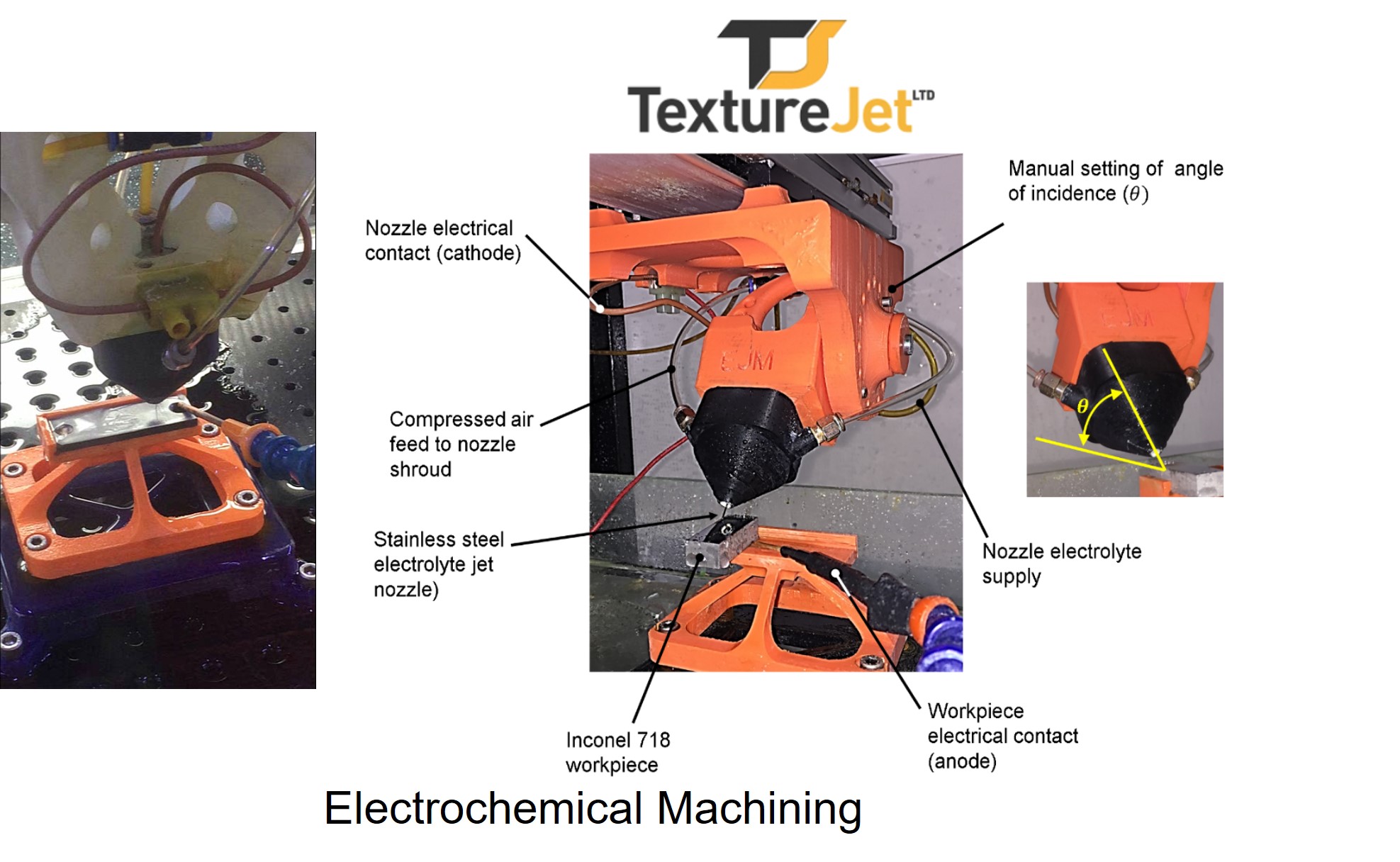
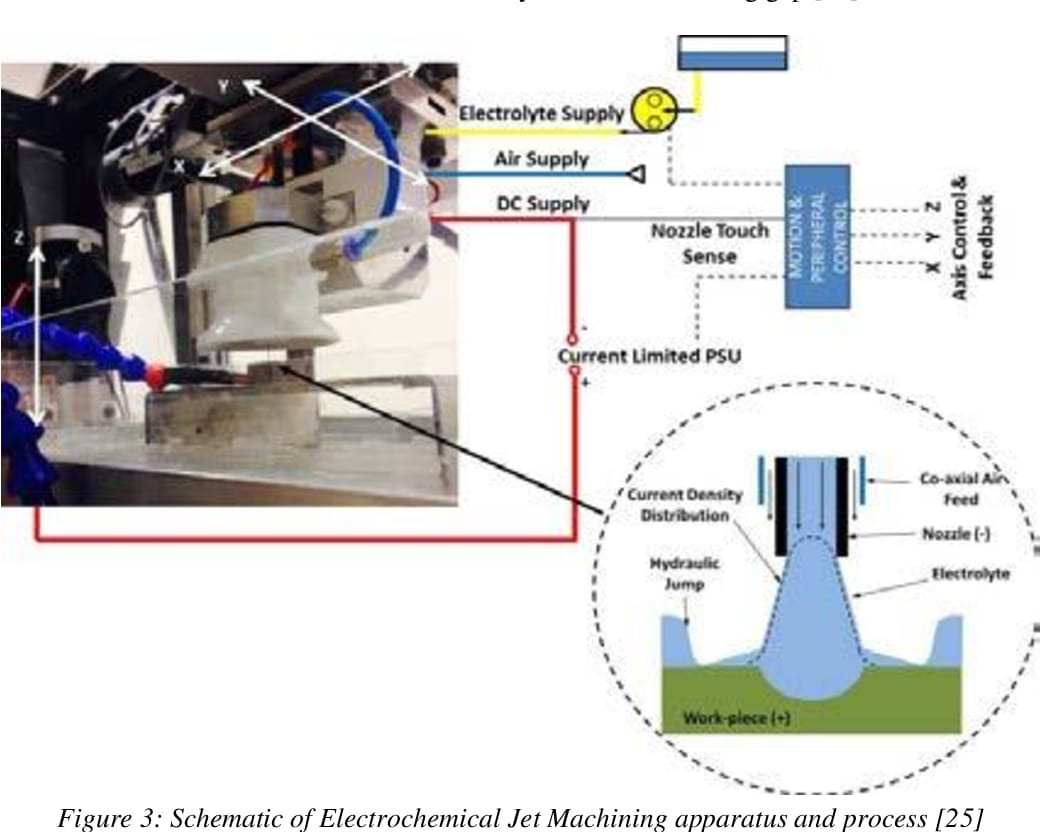
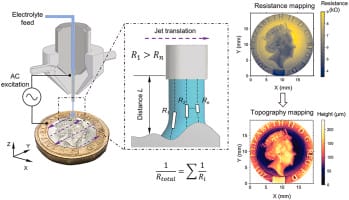
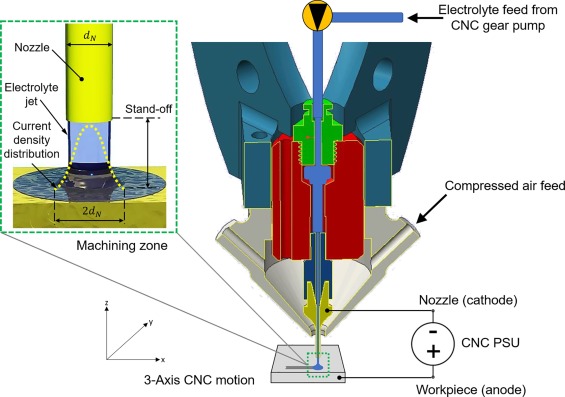
Electrolyte Jet Processing (EJP) is a non-contact, electrochemical jet-based approach to machining and functional surface texturing. In this area, our work has focused on turning EJM from a “single-feature” laboratory process into a repeatable, programmable process family—with control over feature placement, geometry, and surface integrity.
Core themes:
- Process physics + control: linking jet delivery, address angle, and energy distribution to outcomes.
- Programmable surface structuring: translating toolpath concepts into reliable micro-scale surface features.
- Materials sensitivity: understanding how alloy microstructure influences removal behaviour and surface quality.
- Industrialisation: technology translation and application-led development through Texture Jet Ltd.
Selected papers
Work in this area includes publications with Bisterov, Speidel, and Mitchell-Smith (among others):
- Electrolyte jet machining of titanium alloys using novel electrolyte solutions (Speidel et al., 2016)
- Energy distribution modulation by mechanical design for electrochemical jet processing techniques (Mitchell-Smith et al., 2017)
- Transitory electrochemical masking for precision jet processing techniques (Mitchell-Smith et al., 2018)
- Advancing electrochemical jet methods through manipulation of the angle of address (Mitchell-Smith et al., 2018)
- Specific and programmable surface structuring by electrochemical jet processing (Bisterov et al., 2018)
- The importance of microstructure in electrochemical jet processing (Speidel et al., 2018)
- Precision enhanced electrochemical jet processing (Clare et al., 2018)
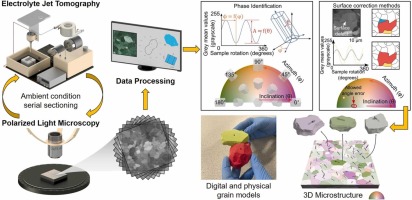
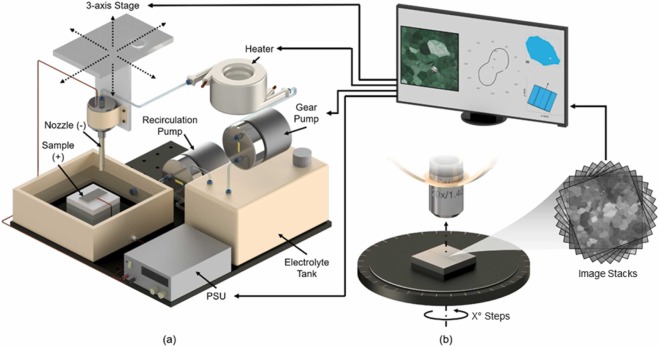
Images from papers
If you tell me which figure belongs to which paper (Bisterov / Speidel / Mitchell‑Smith), I’ll add “Related paper” links under each image.